If you love the coast but feel worn down by seasonal traffic, a more tourism-driven pace, or a housing search full of condos and vacation-oriented options, Florence may already be on your radar. Moving inland is a big decision, especially if you still want convenience, solid job access, and a lifestyle that feels easy to live every day. This guide will help you compare Florence with the Grand Strand so you can decide whether a move from the coast makes sense for you. Let’s dive in.
Why Florence stands out
Florence offers a different kind of daily rhythm than many coastal communities. Instead of an environment shaped heavily by visitors and beach activity, Florence is more centered on routine commuting, local services, healthcare, and neighborhood-focused living.
That does not make it better or worse than the coast. It simply means your day-to-day experience can feel more predictable if you are looking for an inland city with practical access to work, parks, and major roads.
Commutes feel more routine
If commute time is part of your relocation decision, Florence compares well with nearby coastal markets. According to U.S. Census QuickFacts for Florence city, the mean travel time to work is 18.7 minutes.
For comparison, Myrtle Beach reports 17.7 minutes, while Conway reports 24.0 minutes in the same Census data. On paper, these numbers are fairly close, but daily driving conditions can feel different depending on where you live and work.
Myrtle Beach planning documents describe the city as a premier resort destination, with 20.6 million Grand Strand visitors in 2019 and about 50,000 motorists daily in season on the Kings Highway corridor, according to the City of Myrtle Beach Comprehensive Plan. That helps explain why some coastal trips can feel more affected by visitor traffic and corridor congestion.
Florence, by contrast, is generally easier to frame as a more highway-oriented and routine-commute city. Florence County also emphasizes a safe, well-connected roadway network, and the Pee Dee Regional Transportation Authority serves six counties with fixed routes, commuter service, and paratransit.
Florence has strong healthcare access
Healthcare access matters whether you are relocating for work, convenience, or peace of mind. Florence has a significant regional healthcare presence that anchors a large part of the local economy.
McLeod Regional Medical Center is a 517-bed campus covering more than six blocks, with heart and vascular, cancer, women’s, children’s, orthopedic and spine, and minimally invasive surgery services, plus a 48-bed NICU. MUSC Health Florence Medical Center also operates a 24/7 emergency department at 805 Pamplico Highway.
The coast also has substantial healthcare options, but the setup is different. Conway Medical Center reports 222 inpatient beds, about 200 physicians, and 30 specialties, while Grand Strand Medical Center is a 403-bed acute care hospital with a Level I trauma center, according to Conway Medical Center and sources cited in the research.
For many buyers, the takeaway is simple: Florence offers strong healthcare access in a city where medical services are a major part of the local footprint.
Job centers look different inland
One of the biggest shifts when moving from the coast to Florence is the employment mix. If you are used to the Grand Strand economy, Florence may feel more diversified beyond tourism and retail.
Florence County’s land-use plan says service industries are the county’s biggest employers and highlights two hospital systems and two major interstates as part of its industrial advantage. It also points to manufacturing momentum, including the AESC Florence County expansion, which will total $3.12 billion and create 2,700 new jobs.
Myrtle Beach has a more tourism-centered structure. The Myrtle Beach Comprehensive Plan reports that 37.4% of jobs are in accommodation and food services, 15.8% in retail trade, 9.9% in health care, and 5.2% in arts and entertainment.
If you are relocating because you want a city that feels less seasonal in its economic identity, Florence is worth a closer look. It offers a blend of healthcare, service-sector employment, industrial activity, and interstate access that differs from the beach market.
Lifestyle is more park-centered
Moving from the coast does not mean giving up recreation. It usually means changing the type of recreation that is most convenient in your everyday routine.
Florence’s recreation profile is more inland and park-centered. Local amenities include Timrod Park, which has tennis and pickleball courts, an amphitheater, a playground, and picnic space, along with Veterans Park, the Florence Sports Complex, and Lynches River County Park.
By comparison, Myrtle Beach leans into oceanfront and visitor-oriented amenities. The city reports a 1.2-mile oceanfront boardwalk, 37 city parks, 9.25 miles of beaches, 141 public beach accesses, and three recreation centers in its comprehensive plan.
If your ideal week includes beaches, boardwalk activity, and resort-area energy, the coast still offers something unique. If you would rather have a more neighborhood and park-oriented routine, Florence may feel like a better everyday fit.
Housing feels different in Florence
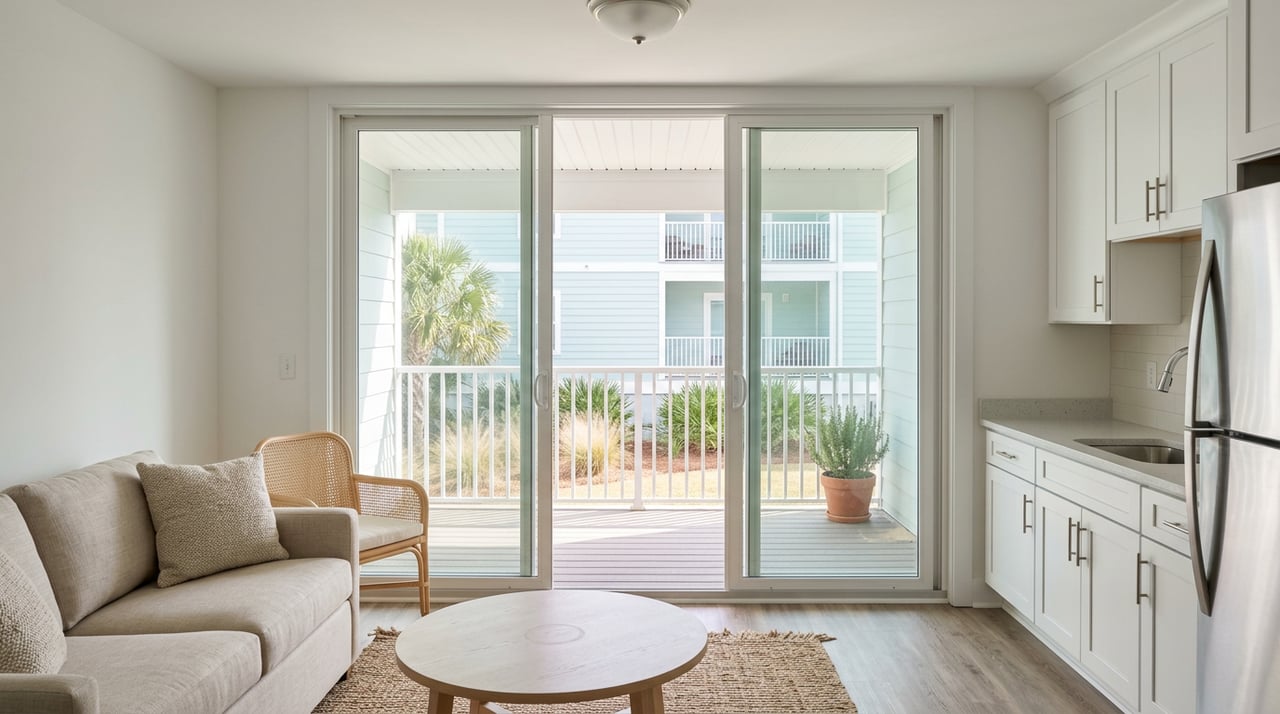
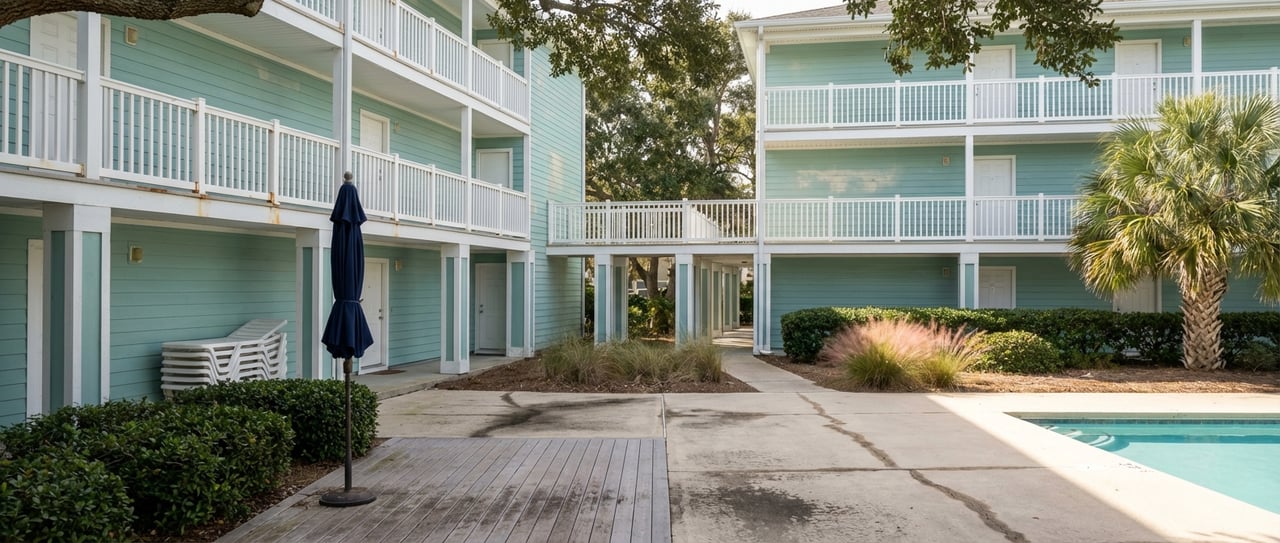
Housing style is often where the coast-to-inland contrast becomes most obvious. If you have been searching in Myrtle Beach or nearby coastal areas, you have probably noticed how often condos, larger multi-family buildings, and seasonal-use properties appear in the mix.
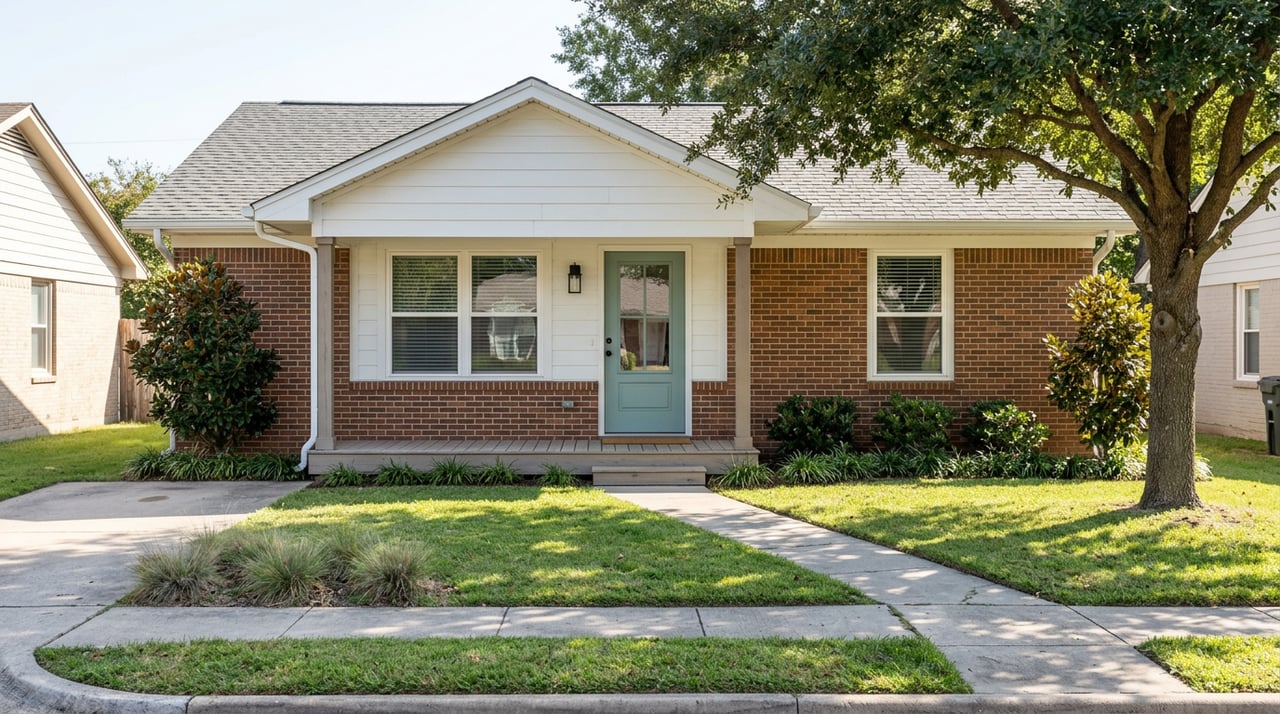
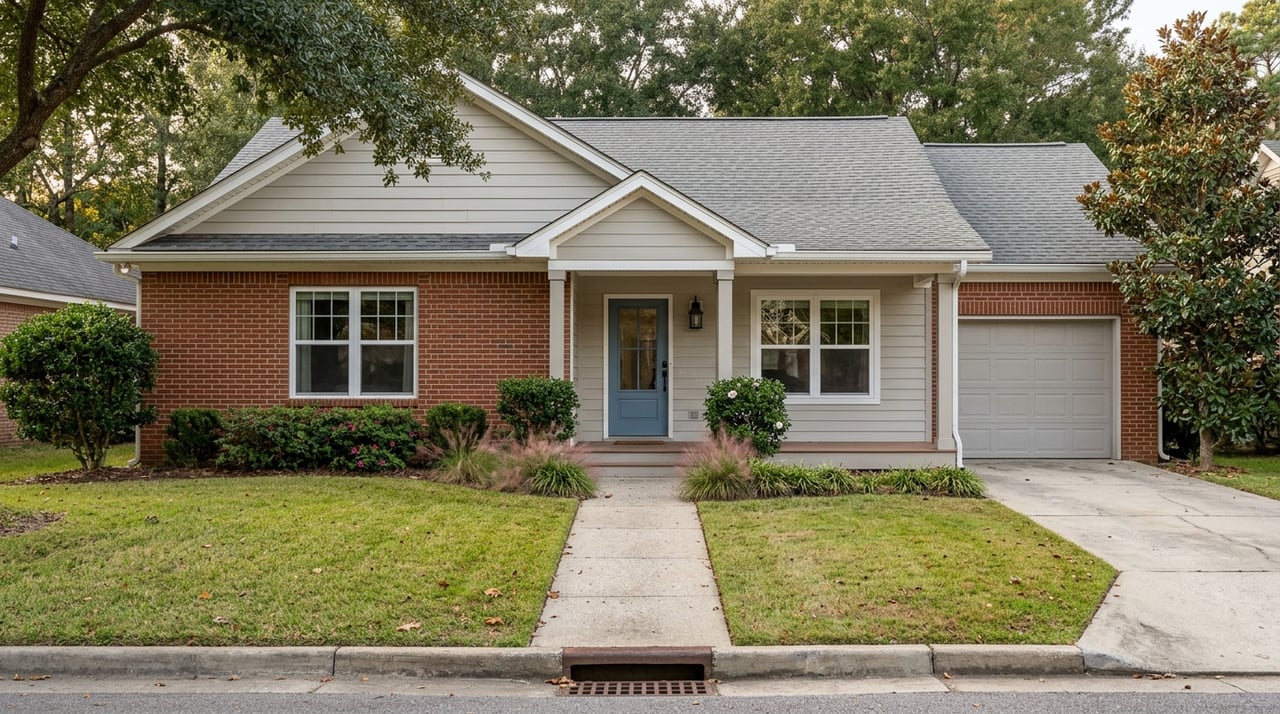
Florence’s 2023 Comprehensive Plan emphasizes a diverse housing stock with newer and older homes, larger and smaller units, and both ownership and rental options. Florence County’s housing element says the dominant housing type is single-family detached, while urban areas include more multi-family attached units, and the county’s municipalities are at least 54% single-family detached.
Myrtle Beach is structurally different. Its comprehensive plan says 32.9% of housing units are single-family detached homes, 30% are in multi-family buildings with 20 or more units, and 23.3% are in multi-family buildings with 3 to 19 units. The same plan also notes 4,224 units were occupied seasonally.
For many buyers, this is one of the clearest reasons to consider Florence. If you want a market that points more heavily toward detached homes and neighborhood-oriented living, Florence may align better with your goals.
Florence vs. Myrtle Beach vs. Conway
If you are still deciding between staying near the beach, moving to Florence, or landing somewhere in between, this quick comparison can help.
| Location | Daily feel | Housing mix | Economy profile | Recreation style |
|---|---|---|---|---|
| Florence | More routine, inland, neighborhood-focused | More detached-home oriented | Healthcare, services, manufacturing, interstate access | Parks, sports facilities, green space |
| Myrtle Beach | More tourism-driven and seasonal | More condos and larger multi-family options | Tourism, retail, hospitality | Beach access, boardwalk, oceanfront amenities |
| Conway | In-between option with riverfront character | Mix varies by area | Government, higher education, healthcare | Riverwalk, trails, blueways, river access |
Conway can be appealing if you want to stay connected to the Grand Strand while stepping away from the more resort-heavy feel. Horry County government offices are based in Conway, Coastal Carolina University is a major institution there, and Conway Medical Center is a large regional hospital campus, according to Horry County government information.
Who Florence may fit best
Florence may be a strong fit if you are looking for:
- A more predictable daily pace
- Strong healthcare access nearby
- Easier access to detached-home-heavy housing options
- A market less shaped by seasonal visitor patterns
- Park and neighborhood amenities instead of beach-centered activity
It may be especially appealing if your work, family routines, or housing preferences no longer line up with the coastal lifestyle. That is often the real issue behind a relocation decision. You are not just changing zip codes. You are choosing the kind of everyday life you want.
What to consider before relocating
Before you move from the coast to Florence, think through the lifestyle tradeoffs clearly. You may gain a different housing mix, a more routine commute pattern, and easier access to inland job centers, but you will also be farther from the beach amenities you may enjoy now.
A smart move starts with a clear list of priorities. Think about commute routes, housing type, proximity to healthcare, access to parks, and whether you want your next home to be in a more neighborhood-oriented setting.
If you are weighing Florence against Conway, Myrtle Beach, or another nearby market, it helps to work with someone who understands both the Grand Strand and the Pee Dee. That kind of local perspective can save you time and help you compare options based on how you actually live.
If you are thinking about relocating from the coast and want practical guidance on Florence, Conway, or the wider Grand Strand and Pee Dee markets, connect with The Kirk Stalvey. You will get local insight, clear communication, and hands-on support as you narrow down the right move.
FAQs
Is Florence, SC a good option if you are moving from Myrtle Beach?
- Florence can be a strong option if you want a more routine daily pace, strong healthcare access, and a housing mix that leans more toward detached homes than Myrtle Beach.
How do Florence and Myrtle Beach commutes compare?
- According to U.S. Census QuickFacts, the mean travel time to work is 18.7 minutes in Florence and 17.7 minutes in Myrtle Beach, though coastal traffic patterns can be more affected by visitor activity.
What is the lifestyle difference between Florence and the Grand Strand?
- Florence is more park- and neighborhood-oriented, while the Grand Strand offers more beach access, boardwalk activity, and tourism-centered amenities.
Is Florence better than Conway for relocation from the coast?
- Florence and Conway serve different needs. Florence is more inland with a strong healthcare and service-sector footprint, while Conway offers riverfront character and direct commuter links to the Grand Strand.
What kind of homes are more common in Florence, SC?
- Florence data points to a housing mix led by single-family detached homes, while Myrtle Beach includes a denser mix of condos and larger multi-family buildings.
Who should talk with a local agent before moving to Florence?
- If you are comparing Florence with Myrtle Beach, Conway, or other nearby markets and want help evaluating commute patterns, housing options, or lifestyle fit, a local agent with knowledge of both coastal and inland markets can help you make a more informed decision.