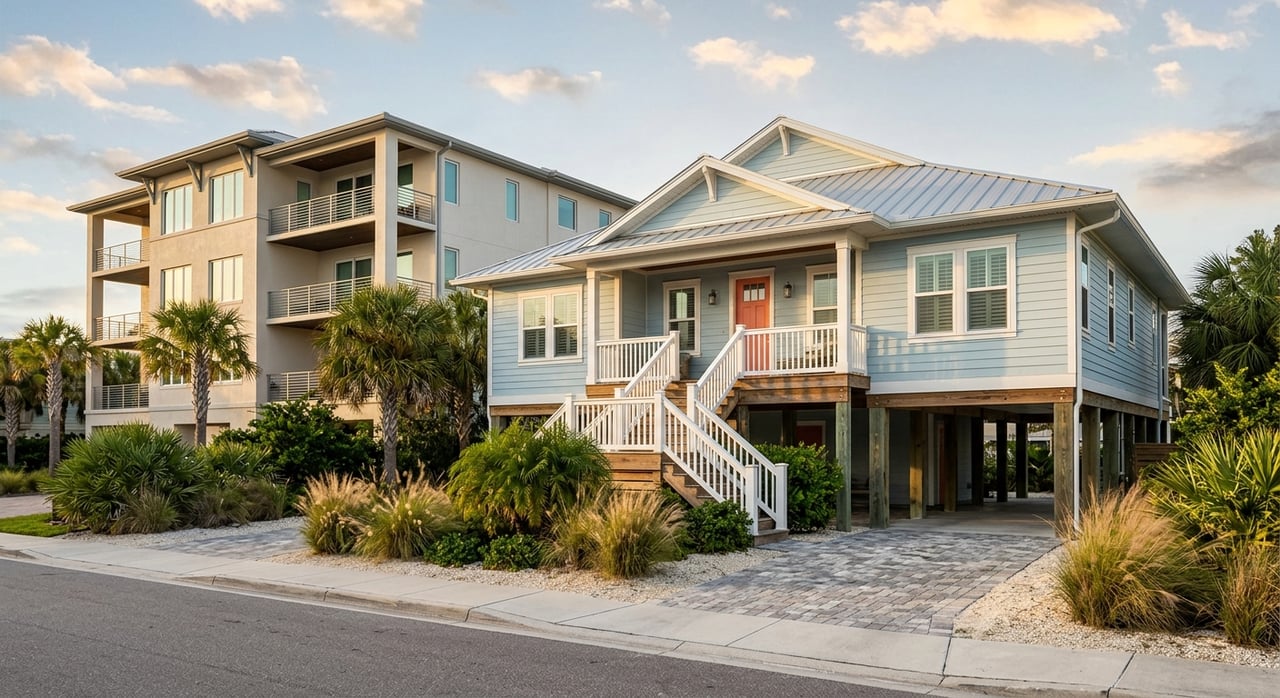
Wondering whether a house or condo makes more sense in Myrtle Beach? You are not alone. A lot of buyers start with the same question, especially when they are balancing beach access, upkeep, monthly costs, and future rental plans. The good news is that there is no one-size-fits-all answer, and once you understand how each option works in Myrtle Beach, the right fit gets much clearer. Let’s dive in.
Why this choice matters in Myrtle Beach
In Myrtle Beach, choosing between a house and a condo is about more than square footage or style. Your decision can affect your monthly budget, maintenance responsibilities, insurance planning, and even whether your property can be rented the way you hope.
This matters in a market where the median listing price is about $279,000, with roughly 4,400 homes for sale and a median days-on-market figure of 71 days. With median rent around $1,750 per month, many buyers are also weighing personal use against long-term or short-term rental potential.
How ownership works
Condo ownership basics
When you buy a condo in South Carolina, you usually own the individual unit while sharing ownership of the common elements with other owners. Under the state’s Horizontal Property Act, common elements can include things like roofs, hallways, lobbies, stairways, foundations, and similar shared systems.
That shared setup also means shared expenses. Co-owners contribute their share of common costs, and the condo’s governing documents may also place limits on lease terms or the number of rentals.
House ownership basics
A house usually gives you more direct control over the structure, exterior, and lot. If you want to make more decisions about outdoor space, exterior updates, or how you use the property, a house often gives you more flexibility.
That said, more control also means more direct responsibility. You are generally the one planning and paying for exterior repairs, yard care, and major system upkeep unless a separate HOA applies.
Maintenance and day-to-day living
When a condo may feel easier
A condo often fits buyers who want a lower-maintenance lifestyle. Monthly condo fees commonly help cover exterior repairs, common-area maintenance, amenity upkeep, and sometimes insurance and reserve funding.
That can make condos appealing if you want a lock-and-leave property for seasonal use, a second home, or simply less day-to-day upkeep. You may spend less time thinking about roofing, exterior painting, or shared grounds care.
When a house may feel better
A house often fits buyers who want more privacy and more say over the outside of the property. If having your own yard, driveway, or exterior space matters to you, a house may line up better with your plans.
You should still remember that a house in Myrtle Beach is not always free from dues. In the Myrtle Beach-Conway-North Myrtle Beach metro, 84.8% of for-sale listings in 2024 had HOA dues, with a metro median HOA fee of $138 per month.
Monthly costs to compare closely
A lot of buyers focus on purchase price first, but your monthly carrying cost is just as important. In Myrtle Beach, that means looking beyond the mortgage and comparing dues, taxes, insurance, and any expected repair costs.
Condo cost picture
With a condo, your monthly fee is a major part of the budget. Nationally, Realtor.com reported a median HOA fee of $375 per month for condo, row-home, and townhome listings, compared with $58 for single-family homes.
That does not mean a condo is always more expensive overall. It means you need to understand what the fee covers, whether the association has healthy reserves, and whether special assessments may be possible.
House cost picture
With a house, your HOA fee may be lower or may not exist, but your maintenance costs are usually more direct. Roof work, exterior repairs, landscaping, and other property upkeep often fall more fully on you.
For some buyers, that tradeoff is worth it because they want more control. For others, the predictability of a condo fee feels easier to manage month to month.
Property taxes depend on use
In South Carolina, the tax treatment depends heavily on how you will occupy the property. The state’s legal residence classification applies a special 4% assessment ratio to a current primary home.
That means the tax advantage is tied to whether the property is your primary residence, not whether it is a house or a condo. If you are comparing two properties, be careful not to assume one type automatically has the better tax outcome.
If you plan to rent it
If the property will be used as a rental, your tax and compliance picture can change. South Carolina applies accommodations tax to sleeping accommodations rented for fewer than 90 consecutive days, and directly booked short-term rentals need a Retail License.
Myrtle Beach also requires short-term or vacation rentals to pay applicable state and local accommodations tax and hospitality fees according to law. If rental income is part of your plan, you should model dues, taxes, and compliance costs together.
Rental potential is never automatic
One of the biggest myths in Myrtle Beach real estate is that condos are always the better rental play. In reality, rental potential depends on the exact property, the exact building or neighborhood, and the local rules that apply.
What to check before you count on rental income
In Myrtle Beach, rental use is shaped by several factors:
- City zoning
- HOA or condo association rules
- Lease restrictions in governing documents
- State and local accommodations taxes
- Insurance and flood risk
The city’s short-term rental zone map identifies areas that allow visitor accommodations, and the zoning code includes districts such as RMV for high-density residential use with visitor accommodations. At the same time, condo master deeds can restrict lease amount or term.
Houses vs condos for rental use
Either property type can work as a rental if the details line up. A condo can be a strong fit when the building rules allow the rental plan, the zoning supports it, the tax handling is clear, and the insurance picture makes sense.
A house can also be a strong fit, especially if the location and zoning support your goals. The key is to evaluate the property itself rather than assume the property type tells the whole story.
Flood zones and insurance matter early
In coastal Myrtle Beach, flood risk should be part of your search from the start. Horry County advises buyers to check the county flood map before purchasing and notes that flood insurance is highly recommended.
The county also states that flood insurance is mandatory in high-risk flood areas for federally related financing. That applies whether you are buying a house or a condo, so flood zone research should happen early, not after you are emotionally attached to a property.
Why condos need extra review
Condo buyers also need to look beyond the unit itself. Lenders evaluate the condo project’s physical condition, financial stability, and any special assessments, and buyers typically have a limited time to review condo documents after an offer is accepted.
That review should include the association’s financials, reserve fund, planned repairs, special assessments, and the remaining useful life of major components. A condo may feel simpler to live in, but it can be more layered during financing and due diligence.
Which option fits your plans best?
Choose a house if you want more autonomy
A house may fit better if you:
- Want more control over the exterior and lot
- Prefer fewer building-level rules
- Value private outdoor space
- Are comfortable handling more maintenance directly
- Plan to use the property as your primary residence and want flexibility
For many primary-residence buyers, a house feels like the better match because it offers more exterior autonomy.
Choose a condo if you want convenience
A condo may fit better if you:
- Want less day-to-day maintenance
- Like a lock-and-leave setup
- Expect to use shared amenities
- Prefer more predictable shared upkeep costs
- Are shopping for a second home or seasonal property
For many buyers, especially second-home shoppers, the convenience factor is the biggest advantage.
Choose based on details if rental use is the goal
If your goal is short-term rental or investment use, neither option wins by default. The better fit depends on whether zoning, HOA rules, taxes, flood risk, and operating costs all support your plan.
That is where local guidance can save you time and help you avoid expensive assumptions.
If you are comparing Myrtle Beach houses and condos, the smartest move is to match the property to how you actually plan to use it. Whether you want a primary home, a seasonal getaway, or an investment property, the right answer usually shows up when you compare ownership rules, monthly costs, rental limits, and flood considerations side by side.
When you are ready to sort through the options with someone who knows the Grand Strand firsthand, connect with The Kirk Stalvey for practical, local guidance.
FAQs
What does a condo HOA fee usually cover in Myrtle Beach?
- Condo HOA fees often cover exterior repairs, common-area maintenance, amenity upkeep, and sometimes insurance and reserve funding, but you should verify the specific association’s documents.
Are Myrtle Beach condos always better for short-term rentals?
- No. Some condos can be strong rental candidates, but you need to confirm city zoning, building rules, lease restrictions, taxes, insurance needs, and operating costs first.
Can a Myrtle Beach house also have HOA fees?
- Yes. In the Myrtle Beach-Conway-North Myrtle Beach metro, a large share of listings include HOA dues, so you should not assume a house is fee-free.
Does South Carolina tax a house differently than a condo?
- Not automatically. The legal residence tax benefit depends on whether the property is your current primary home, not simply on whether it is a house or condo.
What flood insurance questions should Myrtle Beach buyers ask?
- You should ask what flood zone the property is in, whether flood insurance is required for financing, and how flood risk may affect your monthly ownership costs.
What condo documents should Myrtle Beach buyers review before closing?
- You should review the association’s financials, reserve fund, special assessments, major component condition, and any rules that affect leasing or property use.